Health and Safety Policy for Landscaping Shepherds Bush
 This health and safety policy sets out how landscaping work is planned, supervised, and carried out so that risk is reduced for employees, contractors, clients, visitors, and the public. Landscaping can involve machinery, lifting, sharp tools, noise, dust, moving vehicles, uneven ground, and changing weather conditions. For that reason, safety is treated as a core part of every task, not an extra step. Our approach is based on prevention, communication, training, and accountability, with clear expectations for everyone involved in landscaping activities.
We are committed to creating a safe working environment through suitable procedures, appropriate equipment, and regular review of work practices. Every landscaping job, whether routine maintenance or more complex outdoor work, must be assessed before it begins. The aim is to identify hazards early and put sensible controls in place. This includes checking access routes, guarding against slips and trips, controlling dust and debris, and ensuring tools and machinery are used only by trained and authorised personnel.
 The company expects all workers to follow safe systems of work, report hazards promptly, and use equipment correctly. Managers and supervisors are responsible for making sure tasks are properly organised, risks are considered, and staff have the information they need. Employees must take reasonable care of their own safety and the safety of others. Good practice in landscaping health and safety depends on everyone understanding their role and acting responsibly at all times.
Risk assessments are carried out before work starts and are reviewed when conditions change. These assessments consider the type of task, location, tools, weather, nearby traffic, public access, and the physical demands of the work. A safe method of working is then chosen to reduce or eliminate the risk. Where necessary, barriers, signage, permits, or additional supervision may be used. Nothing should be left to assumption when it comes to safety planning.
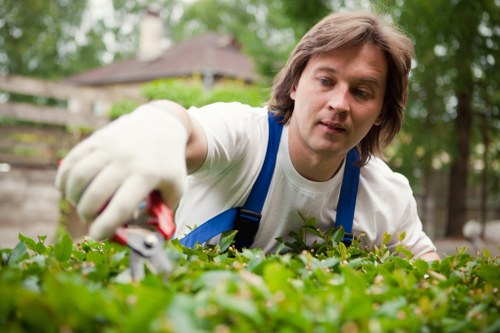
All equipment must be inspected, maintained, and used in accordance with manufacturer instructions and internal procedures. Defective tools or machinery must be removed from service immediately and reported. Personal protective equipment is provided where required and must be worn correctly. Depending on the task, this may include gloves, eye protection, hearing protection, high-visibility clothing, protective footwear, or respiratory protection. PPE is not a substitute for safe work methods, but it is an important additional safeguard in many landscaping operations.
 Manual handling is another important area of control. Landscaping work often involves bags, plants, soil, paving materials, timber, and equipment that can be heavy or awkward to move. Whenever possible, lifting should be avoided through planning, mechanical aids, or team handling. Where lifting is necessary, workers should use suitable techniques, keep loads within safe limits, and avoid twisting or overreaching. By managing physical strain carefully, landscaper safety policy standards can be maintained without reducing productivity.
Working outdoors brings additional hazards such as sun exposure, cold stress, wet surfaces, insects, and unstable terrain. Workers must dress appropriately for the weather, stay hydrated, and take breaks when conditions require it. Surfaces should be checked for slips, trips, holes, roots, stones, and other obstacles before work starts. If ground conditions become unsafe due to heavy rain, frost, or poor visibility, work should be paused until it can be carried out safely. Seasonal conditions must always be factored into planning.
Where landscaping activities take place near roads, driveways, or shared access points, vehicle and pedestrian safety is a priority. Traffic routes should be planned to avoid conflict between moving plant, delivery vehicles, staff, and the public. Reversing should be minimised, and banksman support used where needed. Tools and materials must be stored so that they do not create obstacles or hazards. Clear work zones help protect both workers and members of the public from accidental contact with machinery or debris.
Training and supervision are essential parts of this policy. Workers must receive instruction appropriate to their duties, including the safe use of tools, manual handling, emergency procedures, and hazard reporting. New starters and temporary workers must be supervised until they demonstrate competence. Refreshers should be provided whenever equipment changes, procedures are updated, or concerns arise. A strong landscaping safety policy depends on ongoing learning rather than one-time instruction.
Accidents, near misses, and unsafe conditions must be reported as soon as possible so that action can be taken quickly. Investigations will focus on identifying causes and preventing recurrence, not assigning blame. Emergency arrangements must be suitable for the work being done, including first aid provision and procedures for contacting emergency services if required. Workers should know what to do in the event of injury, fire, chemical exposure, severe weather, or equipment failure. Readiness matters because outdoor work can change suddenly.
Hazardous substances such as fuels, oils, fertilisers, herbicides, and cleaning products must be stored, handled, and disposed of safely. Safety data and instructions should be available where needed, and suitable controls used to reduce exposure. Waste should be separated and removed responsibly to keep sites tidy and reduce the risk of cuts, contamination, or fire. Good housekeeping supports safe movement around the site and helps maintain a professional standard of work throughout the project.
 This policy will be reviewed regularly to ensure it remains effective, current, and appropriate to the work being undertaken. Reviews may also be carried out after incidents, major operational changes, or new safety information. Everyone involved in landscaping activities is expected to support a positive safety culture by following procedures, speaking up about concerns, and treating health and safety in landscaping as a shared responsibility. A careful, consistent approach protects people, equipment, and the quality of the work delivered.
 In summary, this Landscaping Shepherds Bush health and safety policy is designed to prevent harm through planning, training, supervision, and practical control measures. By maintaining equipment, managing hazards, and promoting clear communication, we can carry out landscaping work safely and efficiently. Safety is part of every stage of the job, from preparation to completion, and all workers are expected to uphold these standards at all times.